
AI medical malpractice refers to a possible injury claim involving a healthcare provider, hospital, or medical technology system that used artificial intelligence in diagnosis, treatment planning, monitoring, or records review. As AI tools become more common in healthcare, patients may need to understand where human judgment, software output, and patient safety duties overlap.

What AI Medical Malpractice Means
Artificial intelligence now appears in many parts of healthcare. Some tools help read scans. Others flag abnormal lab results, summarize notes, predict risks, assist with triage, or support treatment decisions. These systems can be useful, but they do not replace careful medical judgment.
In a malpractice case, the central question is usually not whether AI was involved. The question is whether the care fell below accepted medical standards and caused harm. A doctor may rely on a tool, ignore a tool, or use a tool without checking the patient’s full condition. Any of those choices can matter when diagnosis is delayed, treatment is wrong, or a patient suffers avoidable harm.
Patients learning about medical malpractice may find AI cases confusing because the mistake may not look like a traditional doctor error. The problem may involve software, bad data, poor documentation, limited training, or a failure to explain that AI helped guide a medical decision.
Why AI Diagnosis Errors Are Getting More Attention
AI diagnosis tools are getting attention because one system can affect many patients. A tool may be used across a hospital, imaging center, emergency department, or specialty clinic. If it misses a pattern or produces biased output, the same issue may appear in many patient encounters.
The FDA maintains a public list of AI enabled medical devices authorized for marketing in the United States. Many relate to imaging, cardiology, gastroenterology, and other clinical areas. The American Medical Association has also reported that many physicians now use AI in practice, while still raising concerns about flawed conclusions, privacy risks, electronic health record integration, and new liability questions.
Common Places AI Related Errors May Happen
AI related malpractice concerns can appear in several healthcare settings. A radiology tool may miss a suspicious mass. A triage tool may underestimate chest pain or stroke symptoms. A risk scoring system may fail to account for patient history. A note summary tool may leave out key details from a medical record.
These concerns can overlap with existing malpractice topics. A patient harmed during an operation may still need to understand surgical error rights, even if an AI tool was used before or after the procedure.
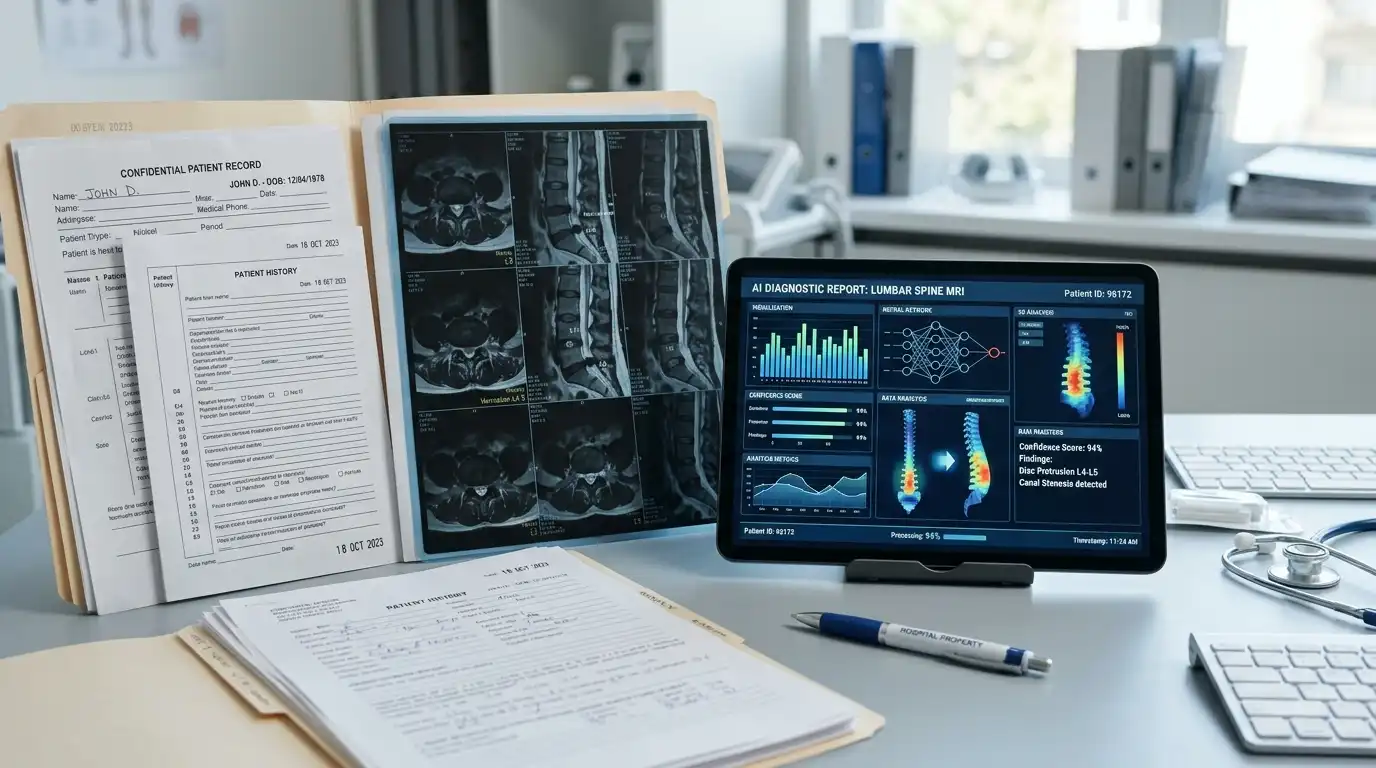
[Inner Image 1 Placement: AI Diagnostic Error and Medical Records]
Who May Be Responsible When AI Gets It Wrong
Responsibility depends on the facts. A healthcare provider may be responsible if they accepted an AI suggestion without proper review. A hospital may be involved if it adopted a tool without enough training, policies, monitoring, or patient safety checks. A technology company may become relevant if the product was defective, poorly labeled, or promoted beyond its safe use.
In many cases, responsibility may be shared. Medical malpractice law often looks at what a reasonably careful provider would have done under similar circumstances. If a clinician had warning signs in the chart but trusted software output instead, that choice may become part of the legal review.
Human Judgment Still Matters
AI tools usually assist, rather than replace, medical professionals. A doctor or clinician still needs to consider symptoms, medical history, physical exam findings, test results, and follow up needs. When software output conflicts with clear warning signs, the provider may need to investigate further.
Example Of A Possible AI Diagnosis Issue
A patient goes to an emergency department with chest pain, shortness of breath, and abnormal vital signs. A risk tool places the patient in a lower risk category, but the chart shows several warning signs. The patient is discharged and later suffers a serious cardiac event. The review may examine the tool, the provider’s judgment, the hospital policy, and whether a safer evaluation should have happened.
Evidence That May Help In An AI Medical Malpractice Claim
AI related claims can be difficult because patients may not have easy access to the software’s internal process. Still, several records can help explain what happened. Medical charts, imaging results, lab reports, discharge instructions, referral notes, and audit logs can show what information was available when the decision was made.
Records To Request And Save
- Complete medical records from the hospital, clinic, or provider.
- Imaging reports, lab results, and pathology reports.
- Discharge papers and follow up instructions.
- Medication lists and treatment plans.
- Messages through patient portals.
- Billing records that may show tests, tools, or services used.
- Names of providers involved in diagnosis or treatment.
Patient Rights When AI Is Used In Healthcare
Patients have a strong interest in knowing who made medical decisions and what information supported those decisions. Even when AI is part of the process, patients can ask questions, request records, seek another opinion, and document symptoms or changes in condition.
How AI Medical Malpractice Differs From Traditional Malpractice
Traditional malpractice cases often focus on a provider’s direct actions. AI cases may add more layers. The review may include software design, hospital adoption policies, training materials, data quality, and whether the tool was suitable for the patient population.
Bias is another concern. If an AI system was trained on incomplete or uneven data, it may work less reliably for certain patients. That can matter in diagnosis, risk scoring, and treatment planning. AI cases can also intersect with other injury claims. A person injured in a crash may first read about rear-end accident liability, then later discover that a delayed diagnosis made the injury worse.
Steps To Take After A Possible AI Related Medical Error
1. Get Medical Care And A Second Opinion
Health comes first. A second opinion can help identify whether a diagnosis was missed, treatment was delayed, or a harmful decision needs correction.
2. Request Complete Records
Ask for the full chart, not only visit summaries. Include imaging, lab work, discharge notes, portal messages, and decision support documentation.
3. Write A Timeline
List symptoms, appointments, tests, phone calls, advice given, and changes in condition. A timeline can help show whether warning signs were missed.
4. Ask Whether AI Was Involved
Patients can ask whether AI assisted with diagnosis, scan review, triage, documentation, or treatment planning.
5. Speak With A Medical Malpractice Professional
AI related malpractice questions can involve medicine, technology, and legal standards. A record review can help identify whether the harm came from a preventable medical decision, a system failure, or another cause.
Final Thoughts
AI medical malpractice is becoming more important as healthcare systems use technology in diagnosis and treatment decisions. AI can support care, but it can also create new risks when clinicians rely on it too heavily, hospitals lack strong safeguards, or patients are left unaware of how decisions were made.
For more information about patient safety and AI in healthcare, visit the ECRI 2026 patient safety concerns, the FDA AI enabled medical devices list, and the AMA report on physician AI use.